The Digital Experience Is Evolving—Is Your Website Ready?
In the current digital landscape, a website’s performance isn’t just a technical concern—it’s a business imperative. Users today expect lightning-fast loading speeds, seamless navigation, and mobile responsiveness. Traditional content management systems like WordPress, though powerful in managing content, often struggle to meet these performance expectations when used alone.
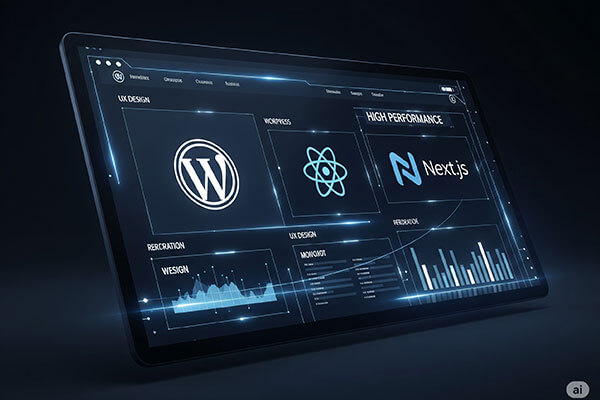
To bridge this gap, developers and forward-thinking businesses are increasingly adopting modern front-end frameworks like React and Next.js alongside WordPress. This combination allows content teams to enjoy the simplicity of WordPress while the front-end—built using React and Next.js—delivers unmatched speed, interactivity, and SEO benefits. If you’re aiming to build a high-performance web presence that meets both user and business needs, this hybrid approach is your secret weapon.
Why Combine WordPress with React and Next.js?
1. Supercharged Website Speed and Load Times
One of the most critical factors affecting user retention and SEO rankings is website speed. React enables component-based rendering, meaning only specific parts of the page update as needed rather than refreshing the whole page. Next.js enhances this with features like static generation and server-side rendering, allowing pages to load almost instantly—even on low-bandwidth networks.
With this stack, content is served swiftly while maintaining visual richness and interactivity. Your audience doesn’t wait, and your bounce rates decrease. That’s a win-win.
2. Rich, Dynamic User Interfaces
User experience is defined by how easily and quickly users can interact with your site. React’s declarative architecture helps in building highly interactive interfaces. Whether it’s a product filter, a real-time dashboard, or a content carousel, React offers flexibility and smooth interactions without refreshing the page.
Next.js further streamlines routing, image optimization, and performance enhancements. The result? A highly responsive, engaging digital experience that users remember—and return to.
3. SEO-Friendly Architecture
Unlike client-side rendering, which can confuse search engine bots, Next.js supports server-side rendering and pre-rendering of pages. This means your site serves complete HTML pages to search engines, improving indexability and boosting your rankings. Better SEO leads to better discoverability, more traffic, and greater conversions.
4. Future-Proof Scalability
As your business grows, your website should grow with it. Using WordPress to manage content ensures non-developers can easily create, update, and organize digital content. At the same time, the React + Next.js front end gives developers the freedom to build and scale without being tied to the limitations of traditional WordPress themes or plugins.
This separation of concerns means teams work in parallel—speeding up development cycles, improving collaboration, and future-proofing your architecture.
Business Advantages of This Hybrid Approach
Combining WordPress with React and Next.js isn’t just a developer’s dream—it’s a strategic move for businesses. Here’s how this integration translates into real-world benefits:
- Reduced Maintenance: Content updates and visual changes can be handled separately, reducing dependencies between teams.
- Increased Conversions: Fast-loading pages and a fluid UX help guide users smoothly from landing page to conversion.
- Personalization and APIs: Easily integrate APIs for personalization, user tracking, or AI-based recommendations.
- Consistent Brand Experience: Complete control over UI design ensures your website looks and feels exactly how you envision it—across all devices.
From startups to enterprise-level organizations, this architecture empowers businesses to build websites that are not only beautiful but also robust and high-performing.
Conclusion: The Smart Stack for a Modern Web Presence
Today, user expectations are high—and patience is low. If your website isn’t fast, interactive, and optimized for both users and search engines, you’re already behind. Integrating WordPress with React and Next.js offers a future-focused solution that blends user-centric design with developer freedom and business scalability.
This strategic combination enables businesses to maintain rich content workflows while delivering the kind of digital experience that wins trust, loyalty, and conversions. If you’re ready to elevate your web presence, this is the stack to bet on.