
Unlock the Future of Web Performance with a Decoupled Approach
In today’s fast-paced digital world, websites must be lightning-fast, highly secure, and user-focused to retain visitor attention. Traditional WordPress architecture, while powerful for content management, often struggles with delivering modern performance benchmarks, especially in high-traffic scenarios. This has led developers and businesses to adopt decoupled (headless) architectures using WordPress as the backend and modern JavaScript libraries like React on the frontend.
By leveraging the WordPress REST API to communicate with a React frontend, developers can create blazing-fast, SEO-optimized web applications that offer an engaging user experience. This separation not only enhances speed and flexibility but also ensures long-term scalability and easier feature upgrades. And with experts like Muniwar Technologies, this transition becomes smooth, secure, and impactful.
Why Consider a Decoupled Architecture?
Going headless separates the backend content management system from the frontend user interface. This means your WordPress dashboard remains intact for content editing, but the public-facing part of your site is built using React—enabling superior responsiveness and customization.
Some of the core benefits of this approach include:
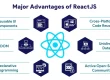
- Faster Page Load Times: React’s virtual DOM and component-based architecture deliver lightning-fast interactions.
- Improved Scalability: Easily scale features or platforms without touching the backend.
- Enhanced Security: Since the WordPress backend is hidden from the frontend, it reduces vulnerabilities.
Flexible UI/UX: Create customized interfaces not bound by WordPress themes.
Role of the WordPress REST API
The WordPress REST API acts as the bridge between the backend and frontend. It fetches content stored in WordPress and serves it as JSON data, which React consumes and displays in real-time. This clean data separation ensures flexibility and decouples the tech stacks entirely.
Benefits of using the REST API include:
- Seamless integration with any JavaScript framework.
- Real-time content updates without full-page reloads.
- Structured, fast-loading JSON responses.
- Ability to extend with custom endpoints as needed.
React Frontend: The Powerhouse of Performance
React is known for its dynamic rendering capabilities and efficient component management. When used as the frontend for a WordPress-powered backend:
- Websites become app-like, delivering smooth transitions and fast data rendering.
- Developers can reuse components for consistent design and reduced dev time.
- It enables features like client-side routing, dynamic theming, and offline access.
Muniwar Technologies specializes in building React-based frontends that seamlessly sync with WordPress REST APIs. Their team focuses on crafting SEO-optimized, mobile-first experiences tailored to your brand’s goals.
Why Choose Muniwar Technologies?
While decoupling sounds complex, Muniwar Technologies simplifies the entire process. Their services include:
- Complete migration from traditional WordPress to headless CMS using REST API and React.
- Custom REST endpoint development to extend API functionality.
- Pixel-perfect frontend design in React with Next.js integration.
- SEO enhancement and performance audits for your new architecture.
- Post-launch support and scalability upgrades.
Their expertise ensures you don’t just build a fast site—you build a future-proof digital platform.
Conclusion
Decoupling WordPress with the REST API and React isn’t just a trend—it’s a smart strategy for businesses looking to improve performance, security, and user experience. With the right approach, you can maintain the content management ease of WordPress while delivering cutting-edge frontend performance.
And with industry leaders like Muniwar Technologies by your side, this transformation becomes both seamless and successful. Whether you’re starting a new project or modernizing an existing one, embracing a headless approach could be the key to your next growth leap.