Fortifying the Backbone of Headless Architecture
In today’s digital landscape, combining WordPress with a modern frontend like Next.js offers excellent flexibility, performance, and scalability. However, with this decoupled architecture comes a new set of security challenges — especially around how data is accessed and protected. At Muniwar Technologies, we understand the importance of secure integration. In this blog, we’ll walk you through essential authentication strategies to safeguard your headless WordPress setup with Next.js — no code required, just clear concepts.
Why Security Matters in a Headless Architecture
Why Security Matters in a Headless Architecture
When you decouple the frontend (Next.js) from the backend (WordPress), the traditional security measures tied to monolithic WordPress sites — like admin access control and plugin firewalls — may no longer apply effectively. That’s why implementing strong, API-focused authentication becomes essential.
1. Understanding WordPress REST API Security
Headless WordPress setups often rely on the REST API to fetch data. While public endpoints (like posts and pages) can be accessed without authentication, any protected or custom content (like draft posts, user profiles, or e-commerce data) requires secure access mechanisms.
2. Authentication vs. Authorization
It’s important to distinguish between:
- Authentication – confirming the identity of a user or app.
- Authorization – determining what actions they are allowed to perform.
Both are crucial in protecting sensitive data when using WordPress as a headless CMS.
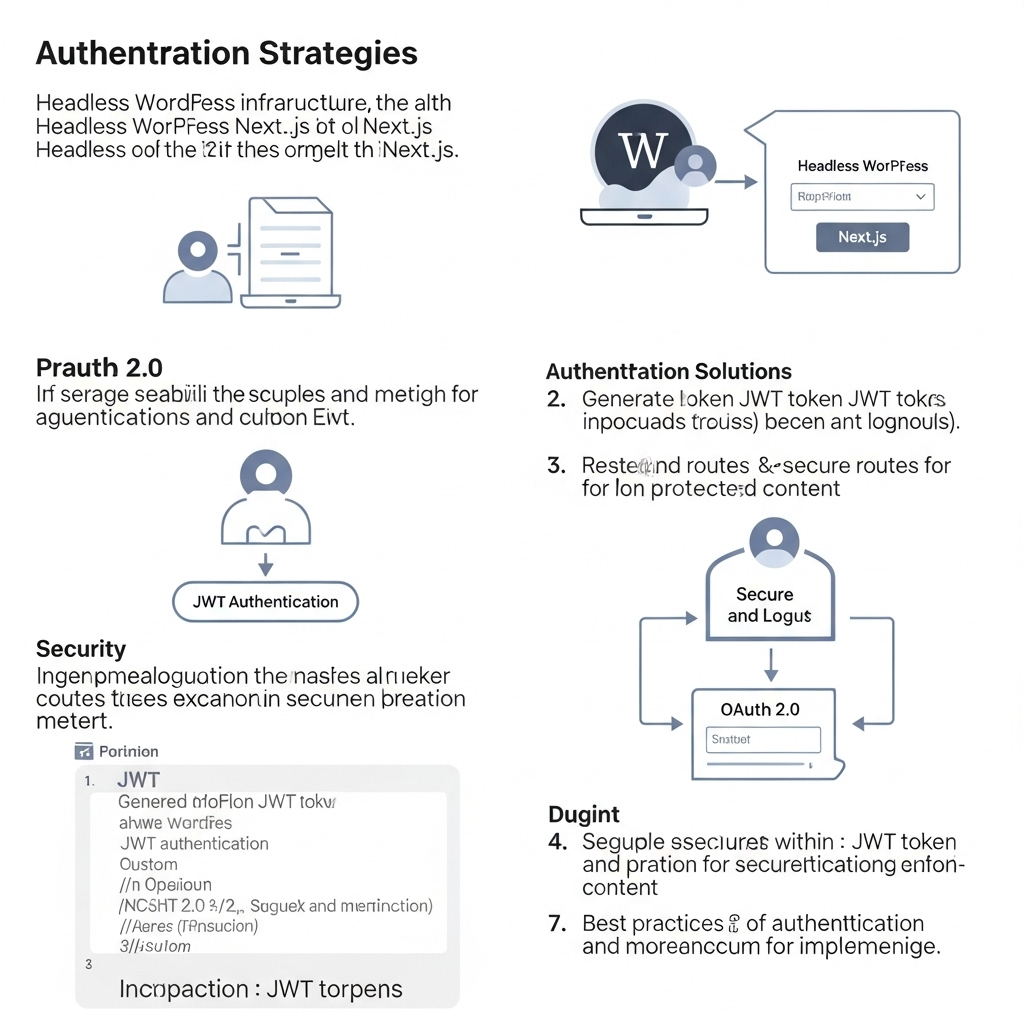
3. Popular Authentication Strategies for Next.js & WordPress
Let’s explore the most widely used methods of authenticating API requests in a secure way:
A. Application Passwords (Ideal for Server-Side Requests)
WordPress supports application passwords for REST API authentication. These are easy to generate and offer a secure way to authenticate server-side requests from Next.js to WordPress.
B. JWT (JSON Web Tokens) Authentication
JWT is a modern and secure approach that allows clients to authenticate via a token, which can be stored and reused until it expires. A plugin like “JWT Authentication for WP REST API” enables this capability.
C. OAuth 2.0 Integration
OAuth is a robust industry-standard protocol that allows third-party applications to access user data without exposing credentials. It’s more complex but provides granular control and security.
4. Secure Your API Endpoints
No matter which strategy you use, follow these best practices:
- Limit exposure of endpoints to only what’s necessary.
- Use HTTPS to encrypt API traffic.
- Sanitize and validate all input/output data.
- Apply rate-limiting and logging to prevent abuse.
5. Protecting Admin Access and Content Creation
In a headless setup, actions like creating posts, uploading media, or managing users can be initiated from your frontend. Ensure:
- Role-based access control is strictly enforced.
- Admin and editor actions are only allowed from authenticated, trusted sources.
- Admin dashboards (even custom ones) are behind secure login systems.
6. Leverage Environment Variables and Middleware
Next.js makes it easy to protect server-side logic using environment variables and API middleware. This can help control access to sensitive functions like token generation or data manipulation.
Conclusion
Headless WordPress with Next.js is a powerful combination, but without the right security approach, your application becomes vulnerable. By implementing robust authentication strategies and securing your API endpoints, you can enjoy the full benefits of modern web architecture — safely and reliably.