
The Growing Need for Speed in High-Traffic Blogging
In the world of digital content, performance matters as much as creativity. For high-traffic blogs, even a few seconds of delay can mean lost readers, lower engagement, and reduced visibility on search engines. That’s why more content marketers and publishers are turning to Headless WordPress—a modern solution that blends the ease of WordPress with the speed and flexibility of a custom frontend.
Let’s explore how Headless WordPress is reshaping the content marketing landscape for high-performing blogs.
The Challenge: Scaling Traditional WordPress for High-Traffic Needs
Traditional WordPress is an all-in-one system—handling both content management and front-end rendering. While convenient, this setup can become a bottleneck as your blog grows:
- Slower page load times due to heavy themes and plugins
- Increased server strain during traffic surges
- Limited control over front-end performance optimization
- Security vulnerabilities from third-party extensions
These issues directly impact SEO, user experience, and conversion rates, especially for high-traffic content platforms.
What Is Headless WordPress?
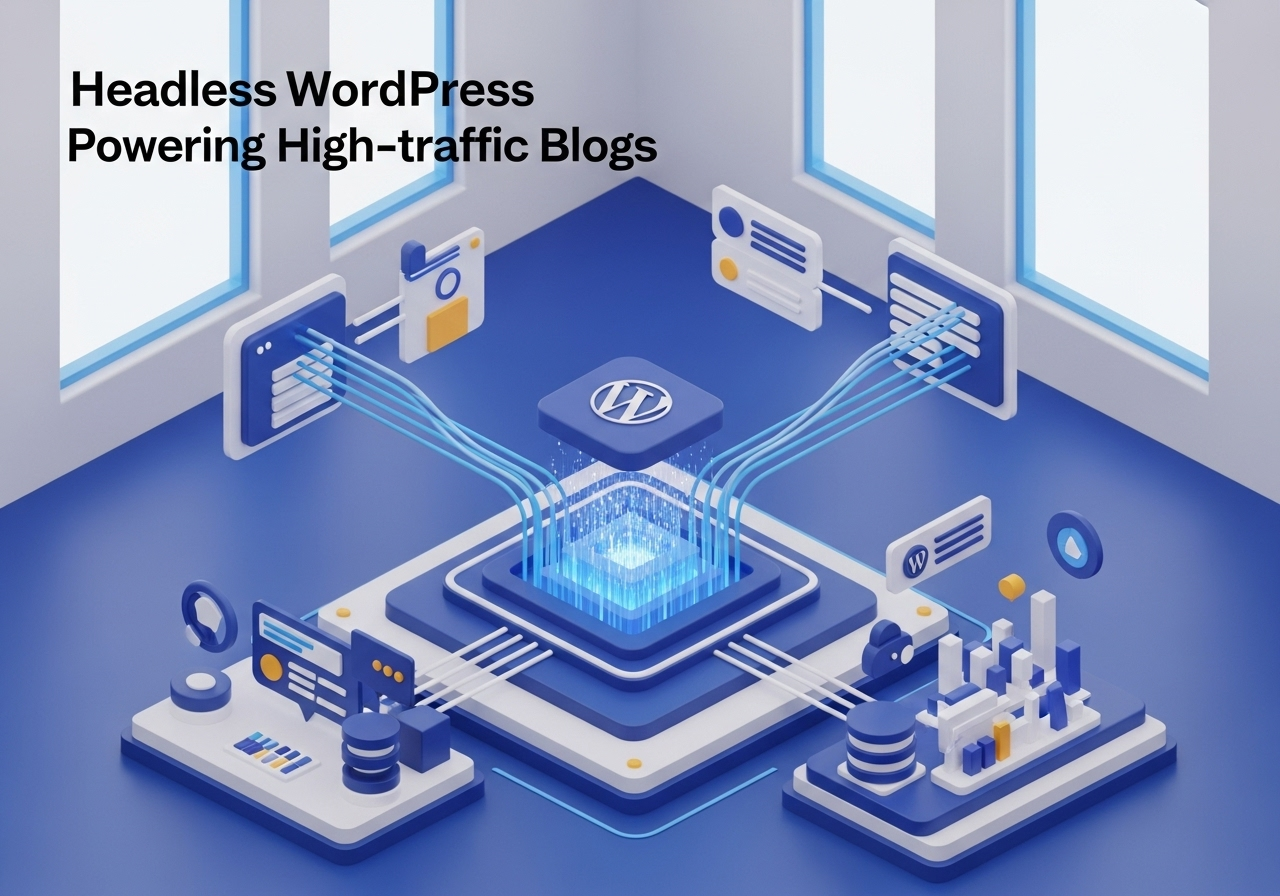
Headless WordPress separates the content management (back-end) from the front-end presentation. Your team continues to use the familiar WordPress dashboard to create and manage content, but the content is delivered to a custom front end—often built using frameworks like React, Vue, or Next.js—through APIs.
The result? A lightning-fast, fully customized blog experience that’s still powered by WordPress.
Why High-Traffic Blogs Should Go Headless
1. Blazing-Fast Performance
With Headless WordPress, your blog is no longer burdened by bulky themes or unnecessary PHP rendering. The front end can be statically generated or server-side rendered, which dramatically improves page load times—a key factor for both SEO and user retention.
- Better SEO and Engagement
Search engines prioritize speed and user experience. A headless setup allows you to:
- Deliver clean HTML and metadata for better indexing
- Improve Core Web Vitals
- Offer instant-loading content that keeps users engaged
- Enhanced Security
By removing the direct connection between your front-end and the WordPress admin area, Headless WordPress reduces your exposure to common threats. Fewer plugins and themes also mean fewer potential vulnerabilities.
- Scalable Content Delivery
High-traffic blogs require global reach. Headless architectures typically serve content via CDNs (Content Delivery Networks), ensuring your blog loads fast for users anywhere in the world—even during viral traffic spikes.
- Greater Flexibility for Custom Experiences
Want interactive features? Infinite scroll? Custom layouts for content series? With a headless setup, your development team has full control over the user experience—without being limited by WordPress themes or outdated front-end tools.
Real-World Success: How Publishers Are Winning with Headless
Many media companies, marketers, and niche publishers have already adopted headless setups to manage massive content libraries and global traffic. Whether it’s a tech blog with daily posts or a lifestyle site with thousands of evergreen articles, Headless WordPress ensures performance doesn’t get in the way of storytelling.
Is Headless Right for You? Key Considerations
Before making the shift, consider:
- Development resources – Headless requires a skilled dev team familiar with JavaScript frameworks.
- Content workflows – Ensure editors and writers can preview and schedule content easily.
- Hosting and infrastructure – Tools like Vercel, Netlify, or Cloudflare Pages are commonly used for deployment.
With the right setup, you get the best of both worlds: content freedom + frontend control.
Conclusion
In today’s digital ecosystem, content marketing isn’t just about producing great articles—it’s about delivering them fast, reliably, and beautifully. Headless WordPress empowers high-traffic blogs to scale without compromise, giving marketers the speed, SEO, and flexibility they need to succeed.
As performance becomes a competitive edge, now is the time to rethink your blogging infrastructure—and future-proof your content platform with a headless approach.