How modern businesses can balance inclusivity with performance and growth
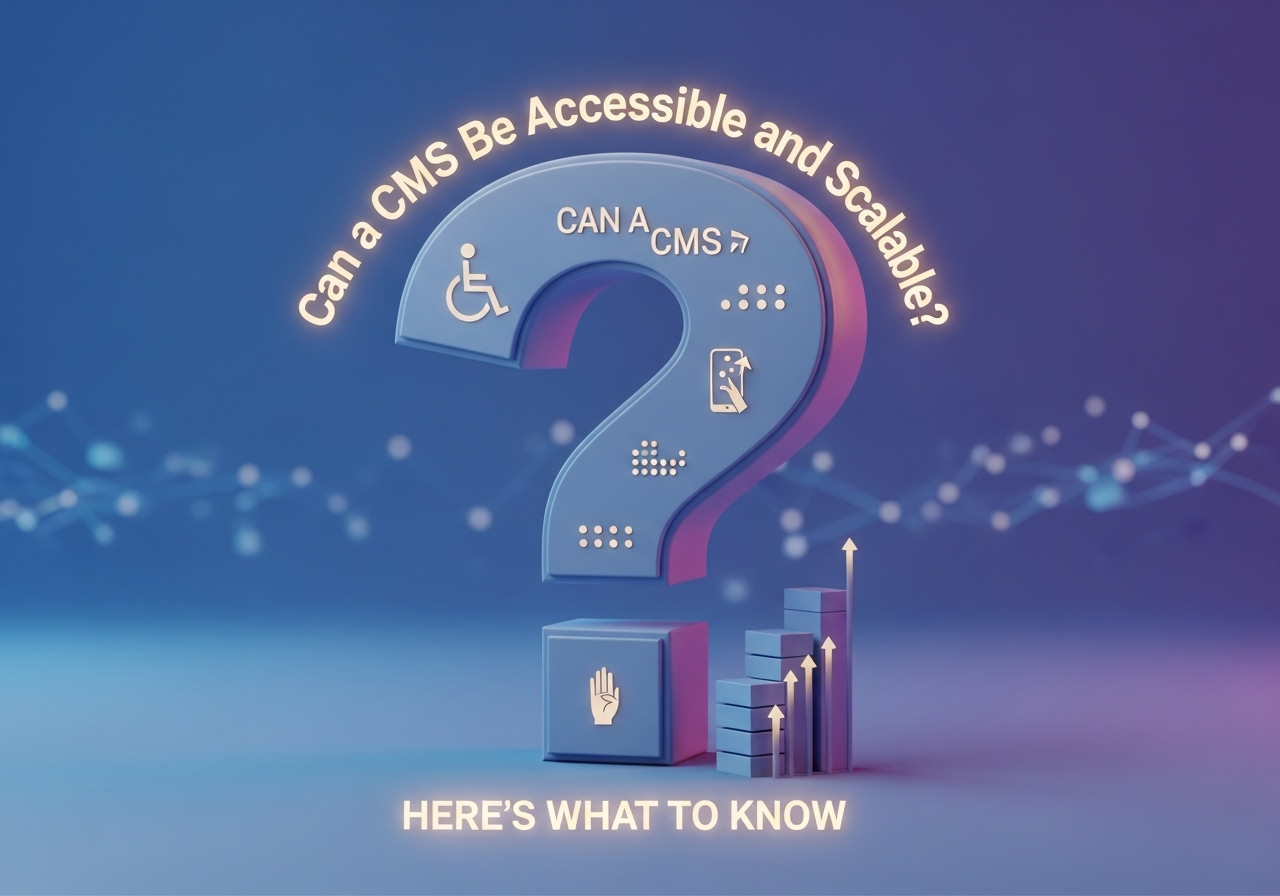
When you’re building a digital experience that must perform at scale—across users, devices, and geographies—accessibility often gets deprioritized. But today’s users, as well as compliance standards, demand better. The good news is that accessibility and scalability are not mutually exclusive—you can build both into your CMS without compromising performance or flexibility.
At Muniwar Technologies, we specialize in building content management and e-commerce platforms that are both WCAG-compliant and enterprise-ready. Whether you’re a business owner, CTO, or digital strategist, this guide will help you make informed decisions about CMS architecture to support long-term growth while meeting accessibility standards.
What Do “Accessible” and “Scalable” Really Mean?
Before comparing CMS options, let’s define the two critical terms:
Accessibility
A website or platform is accessible when it is usable by everyone, including people with visual, auditory, motor, or cognitive disabilities. This includes compliance with WCAG 2.2, ADA, and other accessibility regulations.
Scalability
A scalable CMS grows with your business. Whether you’re expanding product lines, entering new regions, or managing high traffic, your system should handle growth without major restructuring. Common Misconception: You Must Choose One or the Other Some believe that accessible platforms limit design creativity or reduce performance. In reality, modern CMS frameworks and best practices allow both accessibility and scalability to coexist. In fact:
- Accessible design enhances retention, which supports business growth.
- Scalable CMS platforms maintain consistency—crucial for accessible UI.
Key CMS Features That Support Accessibility and Scalability
| Feature | Accessibility Impact | Scalability Impact |
| Semantic HTML & ARIA support | Improves screen reader and keyboard access | Ensures structural consistency across all pages |
| Modular design (components) | Standardizes accessible patterns | Enables reuse and rapid development |
| Headless CMS compatibility | Allows tailored accessibility in frontend | Supports multi-platform delivery |
| Version control and workflows | Tracks accessibility changes | Scales with team and content volume |
| API integrations | Adds support for assistive tech tools | Enables advanced features and integrations |
| Plugin/extension ecosystem | Adds contrast checkers, accessibility plugins | Extends core CMS capabilities |
Real-World CMS Comparison: WordPress vs Headless CMS
| Criteria | WordPress | Headless CMS (e.g., Strapi, Contentful) |
| Accessibility Plugins | Available and extensive | Requires manual implementation |
| Content Editing | User-friendly for non-tech teams | Needs structured workflow setup |
| Customization | Limited by themes and plugins | Fully customizable with modern frontend technologies |
| Performance at Scale | May slow down with plugin overload | Optimized for traffic and high-volume content |
| Best Use Case | Blogs, small–mid-sized websites | Enterprise, multilingual, e-commerce platforms |
Bottom Line:
- Choose WordPress for quick deployment with pre-built accessibility support.
- Choose a Headless CMS for high scalability and full design flexibility.
Accessibility and Scalability Checklist for CMS Selection
Before selecting your CMS, ask yourself:
- Can the platform enforce WCAG-compliant templates and UI components?
- Does it support alt text, form labels, keyboard interaction, and focus management?
- Is content structured and semantically meaningful?
- Can it scale to 10,000+ pages or concurrent users without a full rebuild?
- Are integrations available for accessibility testing or enhancements?
- Can content be tested and previewed from the perspective of users with disabilities?
Use tools like axe DevTools, Lighthouse, and screen readers such as NVDA or JAWS to test real-world output. Case Study: Scaling an Inclusive Digital Presence Client: Ed-tech startup Challenge: Create a CMS to support 10,000+ students, including students with disabilities, across multiple regions. Solution:
- Implemented a Headless CMS with a React frontend
- Built a reusable component library with ARIA and keyboard navigation
- Integrated real-time previews and accessibility testing Result: The platform now handles over 1 million monthly page views with accessibility scores consistently above 95%.
Why Muniwar?
At Muniwar Technologies, we bring together development expertise and inclusive design to deliver future-ready solutions. We help businesses:
- Audit current CMS platforms for accessibility and performance gaps
- Customize CMS workflows and templates to meet global standards
- Build ADA & WCAG 2.2-compliant UIs from the ground up
- Deploy scalable digital stacks across industries and user bases
Our approach ensures your infrastructure remains compliant, usable, and adaptable as technology and legal frameworks evolve.
Conclusion
By choosing the right CMS architecture—and the right development partner—you can create a digital presence that is both resilient and inclusive. Accessibility isn’t a barrier to scale—it’s a bridge to greater reach, better performance, and long-term value.
Ready to Build a Scalable, Accessible Digital Experience?
Connect with Muniwar Technologies today. We’ll help you evaluate your options, choose the right platform, and build digital solutions that are compliant, future-ready, and inclusive for all. Call Us +91 888-22-66-111 | +91-11-43050611