Accessibility Is No Longer Optional—It’s a Strategic Advantage
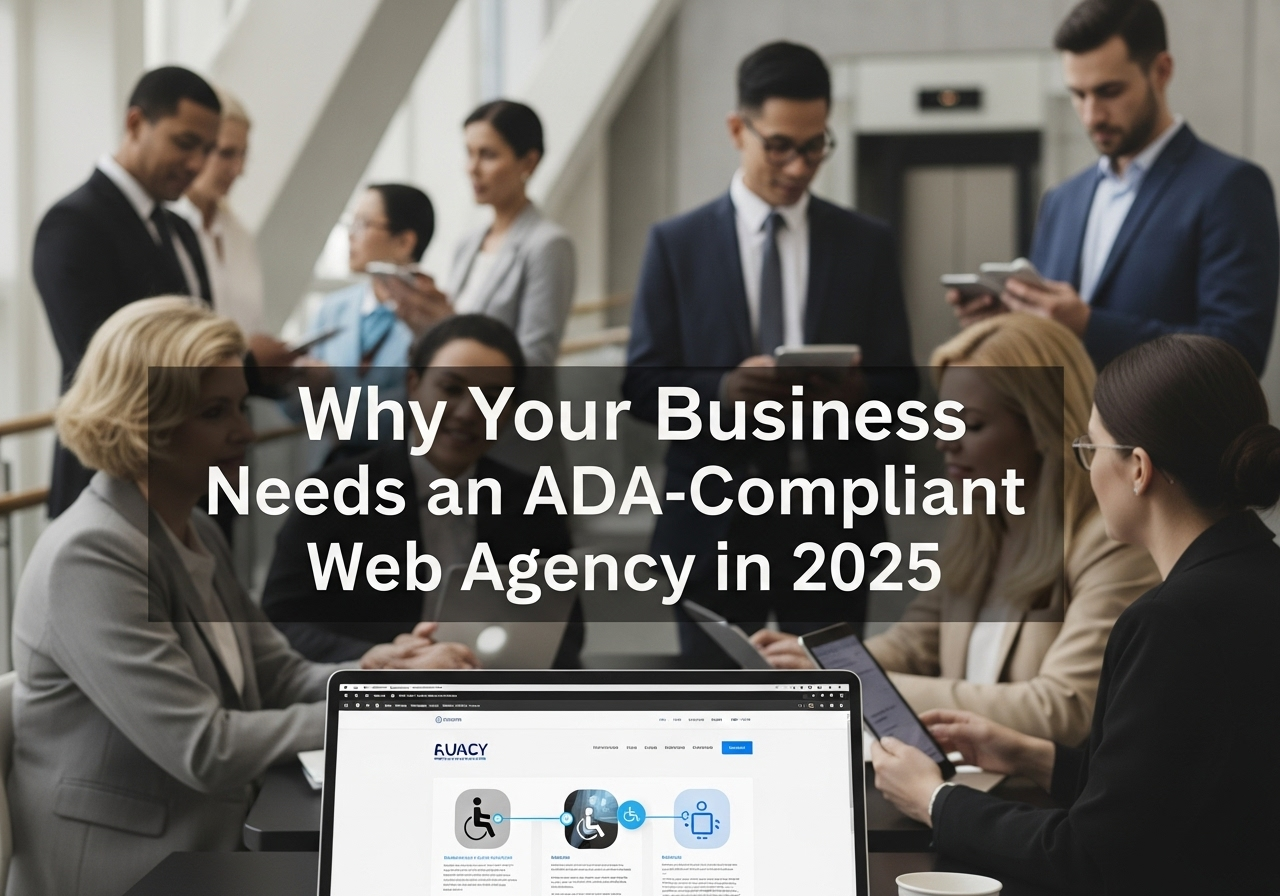
In 2025, digital accessibility isn’t just a legal checkbox—it’s a core component of smart, inclusive, and forward-thinking business strategy. As web standards evolve and regulations tighten, ADA (Americans with Disabilities Act) compliance is now essential for websites across every industry, from healthcare and retail to finance and education.
If your website still isn’t fully accessible to people with disabilities, it’s time to act. And more importantly, it’s time to partner with an ADA-compliant web agency that understands the nuances of modern CMS solutions, user experience (UX), and legal accountability.
Here’s why your business should care—and how a trusted agency like Muniwar Technologies can guide the way.
What Is ADA Compliance in Web Design?
ADA compliance refers to making your website usable by individuals with disabilities, including those who are blind, deaf, have motor impairments, or cognitive disabilities. The standard that most agencies follow is WCAG 2.2 (Web Content Accessibility Guidelines), which outlines principles like:
- Perceivable: Can all users perceive the content?
- Operable: Can users interact with all elements?
- Understandable: Is the content clear and predictable?
- Robust: Can assistive technologies reliably interpret your site?
In the U.S. and many other countries, inaccessible websites can lead to lawsuits, lost customers, and reputational damage.
7 Reasons Why You Need an ADA-Compliant Web Agency in 2025
- Avoid Legal Risks and Penalties
Lawsuits related to website inaccessibility are rising every year. In 2024 alone, over 4,500 ADA web accessibility lawsuits were filed in the U.S.
Example: A retail site using a popular WordPress theme faced legal action because their checkout page couldn’t be accessed via screen reader.
Muniwar Insight: We help you proactively audit and correct violations before they turn into liabilities. - Expand Your Audience
Fifteen percent of the global population lives with some form of disability. By making your website accessible, you unlock new customer segments and improve overall user satisfaction.
Checklist:
- Is your site navigable by keyboard only?
- Are all images labeled with meaningful alt text?
- Can screen readers interpret your forms, buttons, and menus?
- Boost SEO and Site Performance
Search engines favor clean, semantic, and accessible code. Features like proper heading structure, image descriptions, and readable content contribute to higher Google rankings.
Headless CMS vs WordPress Comparison:
| Platform | SEO Flexibility | Accessibility Control |
| WordPress | High (plugin-based) | Medium – varies by theme |
| Headless CMS | Very High (custom) | Very High – developer-driven |
- Enhance Brand Trust and Reputation
Consumers are more loyal to brands that value inclusivity. Showing that your business prioritizes accessibility strengthens your reputation.
A dental group that added ADA-compliant features like high-contrast modes and audio-assisted booking saw a 17% increase in appointment requests within months. - Deliver Better User Experience for All
Accessibility features like responsive design, readable fonts, and intuitive navigation improve the experience for all users, not just those with disabilities.
UX Tip: If your mobile experience is slow or confusing, accessibility issues may be to blame. - Ensure Long-Term Scalability
An ADA-compliant site is easier to maintain and scale. Future technologies—such as voice control, gesture-based navigation, or AI-driven personalization—are built on accessible frameworks.
With Muniwar: We ensure your website is not only compliant today but prepared for what’s coming next. - Stay Competitive in RFPs and B2B Deals
More corporate clients and public sector contracts now require ADA-compliant websites. A non-compliant site could disqualify you from bids
.
Agency Check
- Does your current web partner know WCAG 2.2 standards?
- Do they offer accessibility audits and remediation?
- Can they integrate your CMS or platform with accessibility in mind?
Features You Should Expect from an ADA-Compliant Web Partner
- Comprehensive accessibility audit (manual + automated)
- WCAG 2.2 implementation
- Support for screen readers and keyboard-only navigation
- High contrast options and scalable font sizes
- Use of semantic HTML and ARIA roles
- Ongoing monitoring and updates
- CMS and e-commerce platform expertise (WordPress, Headless CMS, Shopify, etc.)
Conclusion
At Muniwar Technologies, we specialize in building ADA-compliant, future-ready digital experiences. From WordPress and Drupal to Headless CMS setups like Sanity and Strapi, we ensure accessibility is built into every layer—from infrastructure to interface.
Talk to an Accessibility Expert Today
If you’re ready to future-proof your website and open it to every user, contact Muniwar Technologies.
Email: info@muniwar.com
Phone: +91 888-22-66-111 | +91-11-43050611