
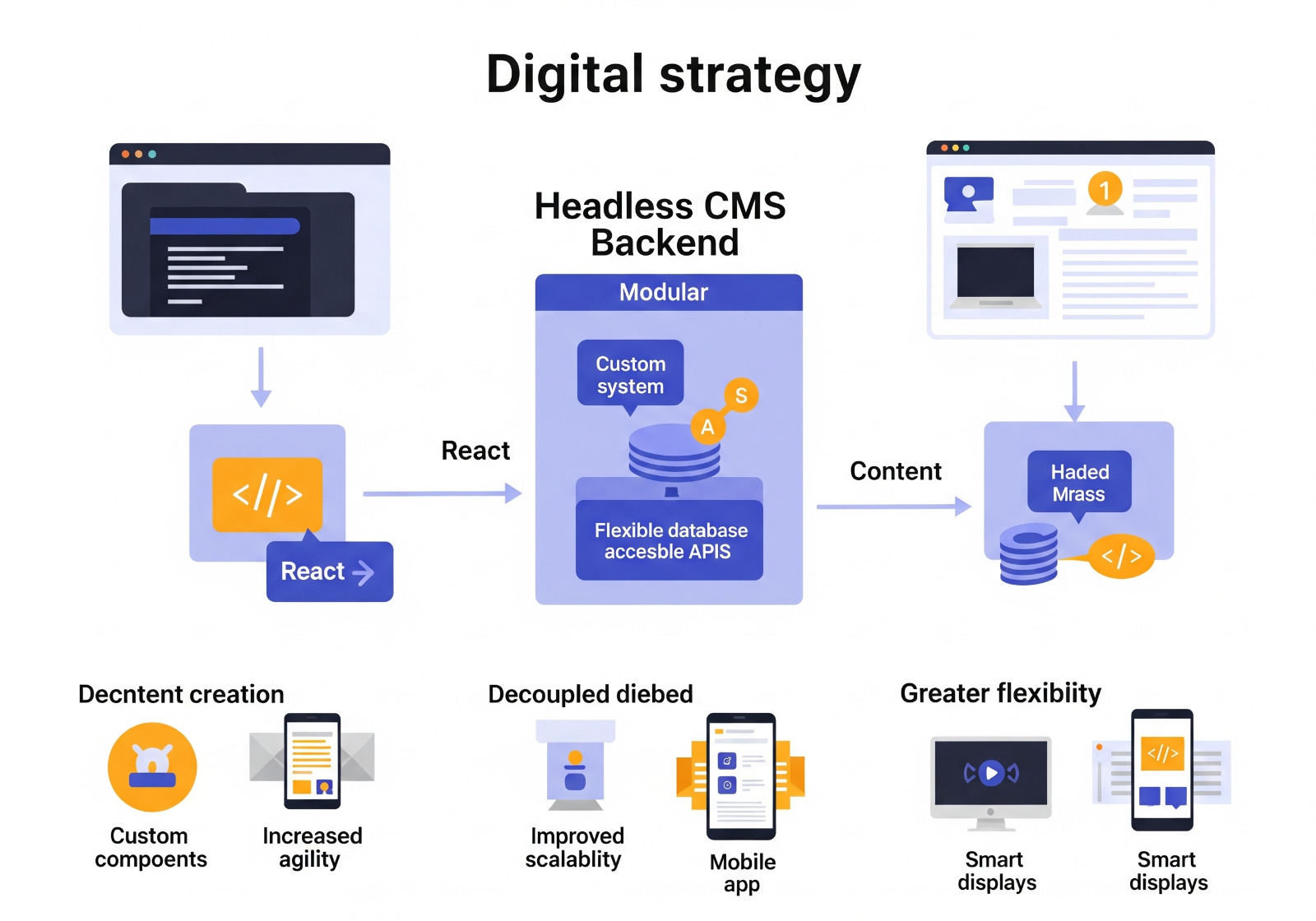
Bridging Performance and Flexibility in Modern Web Development
Modern websites are expected to be fast, engaging, and search engine friendly. However, traditional WordPress setups often fall short when it comes to delivering lightning-fast performance or customizing the frontend to match evolving digital trends. The increasing need for seamless performance, flexibility, and higher search visibility has paved the way for a more modular approach.
By decoupling the frontend and backend, developers now use React to create dynamic user interfaces, while still leveraging WordPress as a reliable content management system (CMS). This headless configuration not only enhances the site’s responsiveness and user experience but also opens up strategic SEO benefits that are crucial for online growth.
Why Decoupling WordPress with React Matters
1. Flexibility Beyond Themes
Traditional WordPress themes can be limiting in terms of design and frontend control. React allows developers to break free from these restrictions and build highly interactive, visually appealing interfaces that can adapt to the specific needs of a brand.
2. Faster Load Times for Better Rankings
Speed is a critical factor for both user satisfaction and search engine optimization. A React frontend reduces load times by enabling faster rendering, lazy loading, and streamlined JavaScript execution. This contributes directly to improved Core Web Vitals—an essential ranking factor for Google.
3. Enhanced Mobile Experience
With a significant portion of users browsing on mobile, offering an optimized experience across all devices is crucial. React enables responsive designs with smooth interactions, ensuring that your site remains user-friendly on smartphones and tablets, further boosting your SEO scores.
Advantages of Using React with Headless WordPress
1. Custom Meta and Structured Data
React allows full control over HTML markup and meta tags. When paired with SEO plugins or custom APIs from WordPress, you can inject structured data, Open Graph tags, and canonical links—vital elements for search visibility and social sharing.
2. Server-Side Rendering (SSR) and Static Site Generation (SSG)
By using frameworks like Next.js with React, you can implement SSR or SSG to serve pre-rendered HTML to search engines. This makes your site content instantly crawlable and indexable—unlike single-page applications (SPAs) that rely on client-side rendering.
3. Clean URLs and Content Management
WordPress continues to manage posts, pages, media, and taxonomies. When connected via REST API or GraphQL, your React frontend can dynamically fetch and display this content while maintaining SEO-friendly URL structures and content hierarchies.
Optimizing for Performance and Growth
Additionally, a React-based frontend allows for better integration with analytics, marketing tools, and automation services that are crucial for scaling your digital strategy.
Conclusion
Combining the power of a WordPress backend with the flexibility of a React frontend is a future-proof strategy for websites aiming to boost performance, improve SEO, and deliver superior user experiences. It empowers teams to build fast, responsive, and scalable digital experiences while continuing to manage content through the familiar WordPress interface. As search engines become more experience-focused, this headless architecture stands out as a smart investment for sustained growth and visibility.