From Slow to Scalable: The Performance Benefits of Going Headless
In today’s digital-first world, your website is more than just a digital brochure. It’s your brand’s voice, your sales engine, and the foundation of your online strategy. But if your current site is built on outdated technology or a bloated framework, it may be slowing you down more than you realize.
Many forward-thinking businesses are making a smart move: rebuilding their legacy sites using Headless WordPress and Next.js. At Muniwar Technologies, we see this shift not just as a technical upgrade, but as a strategic investment in performance, flexibility, and growth.
Why Legacy Sites Hold You Back
Legacy websites—often built years ago on monolithic systems—come with serious limitations that can stifle growth:
- They load slowly, frustrating users and hurting SEO.
- Even simple updates require developer support.
- Security risks increase as plugins and frameworks age.
- Mobile responsiveness is limited or outdated.
- Marketing teams face roadblocks when managing content.
These challenges compound over time, directly impacting your brand image, marketing agility, and bottom line.
✅ Why Rebuild with Headless WordPress and Next.js?
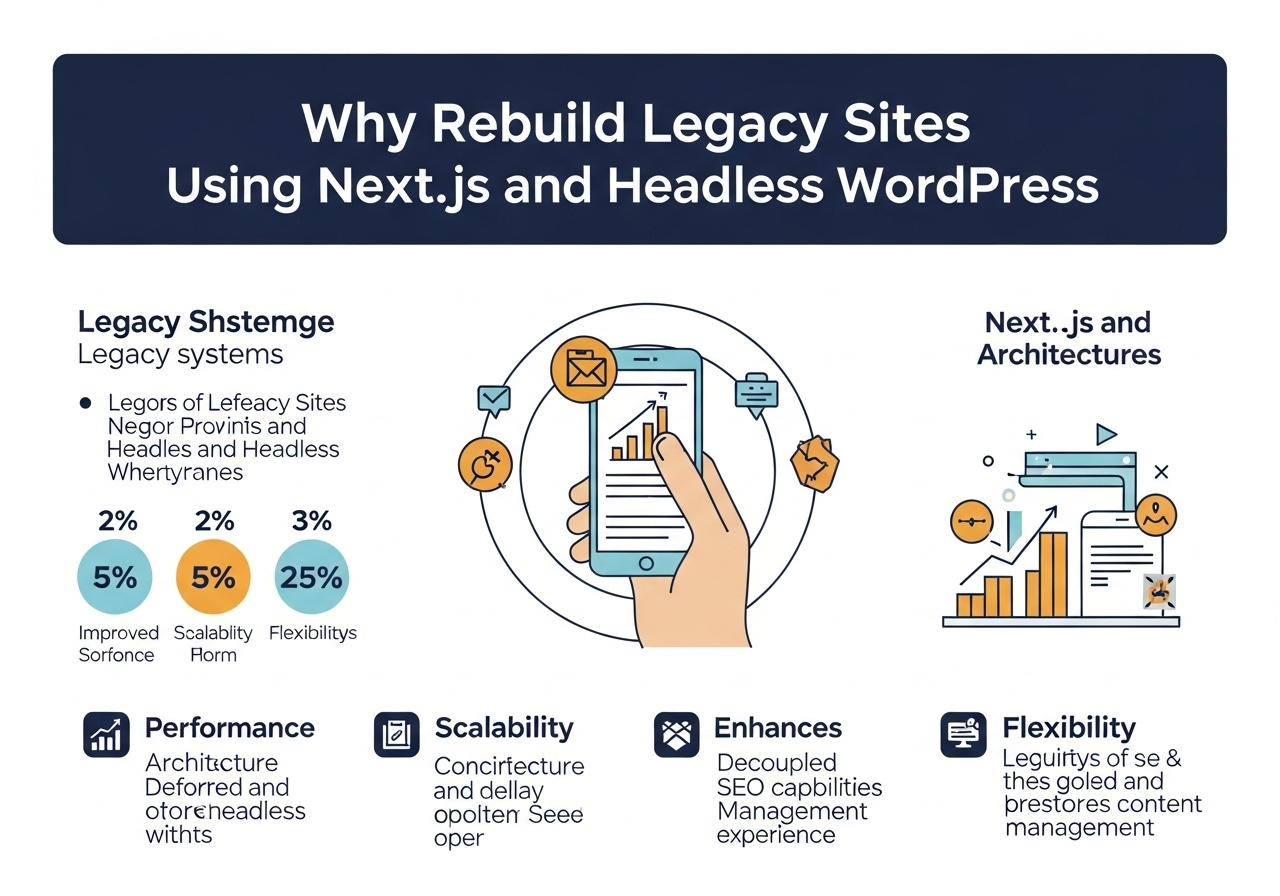
Rebuilding your site with Headless WordPress and Next.js offers transformational business advantages:
1. Speed and Performance
Next.js delivers lightning-fast load times and smooth navigation. This impresses users and boosts search engine rankings, engagement, and conversions.
2. Design and Brand Freedom
Say goodbye to restrictive WordPress themes. With a decoupled frontend powered by Next.js, your design possibilities are limitless. Build custom digital experiences that truly reflect your brand.
3. Faster Content Updates
Marketing teams can continue using WordPress’s user-friendly backend while developers work independently. This allows faster campaign launches, landing pages, and content edits—without developer bottlenecks.
4. Scalable and Future-Ready
Your content can now be delivered to websites, mobile apps, kiosks, and more—all from a central content hub. This architecture future-proofs your business and enables true omnichannel reach.
5. Improved Security and Maintenance
By separating the backend (WordPress) from the frontend (Next.js), security risks are reduced. Updates become simpler, with fewer disruptions caused by outdated plugins or themes.
6. Developer Productivity
Modern developers prefer frameworks like React and Next.js. It’s easier for them to build, test, and iterate quickly, which helps reduce long-term maintenance costs and speeds up innovation.
Conclusion
Rebuilding your legacy website with Next.js and Headless WordPress isn’t just a technical improvement—it’s a strategic business decision. It allows your brand to deliver faster performance, enhance security, enable flexible design, and empower both developers and content teams to work efficiently.
At Muniwar Technologies, we help businesses future-proof their digital presence by embracing modern web architecture. If your current site is holding you back, it’s time to move forward with a solution built for speed, scalability, and long-term growth.