Why Enterprises Need a Smarter Web Strategy
Together, they offer a modern architecture that unlocks performance, flexibility, and growth at scale. Here’s how enterprises can benefit from this transformative setup.
Why Traditional CMS Structures Fall Short
While WordPress is the most popular content management system in the world, its traditional monolithic setup—where the front-end and back-end are tightly connected—can present roadblocks for large-scale enterprise needs:
- Slow load times due to plugin-heavy environments
- Security vulnerabilities
- Limited front-end flexibility
- Difficulty handling high traffic volumes globally
Enterprises need a solution that’s both robust and agile. That’s where Headless WordPress and the Jamstack architecture shine.
What Is Headless WordPress?
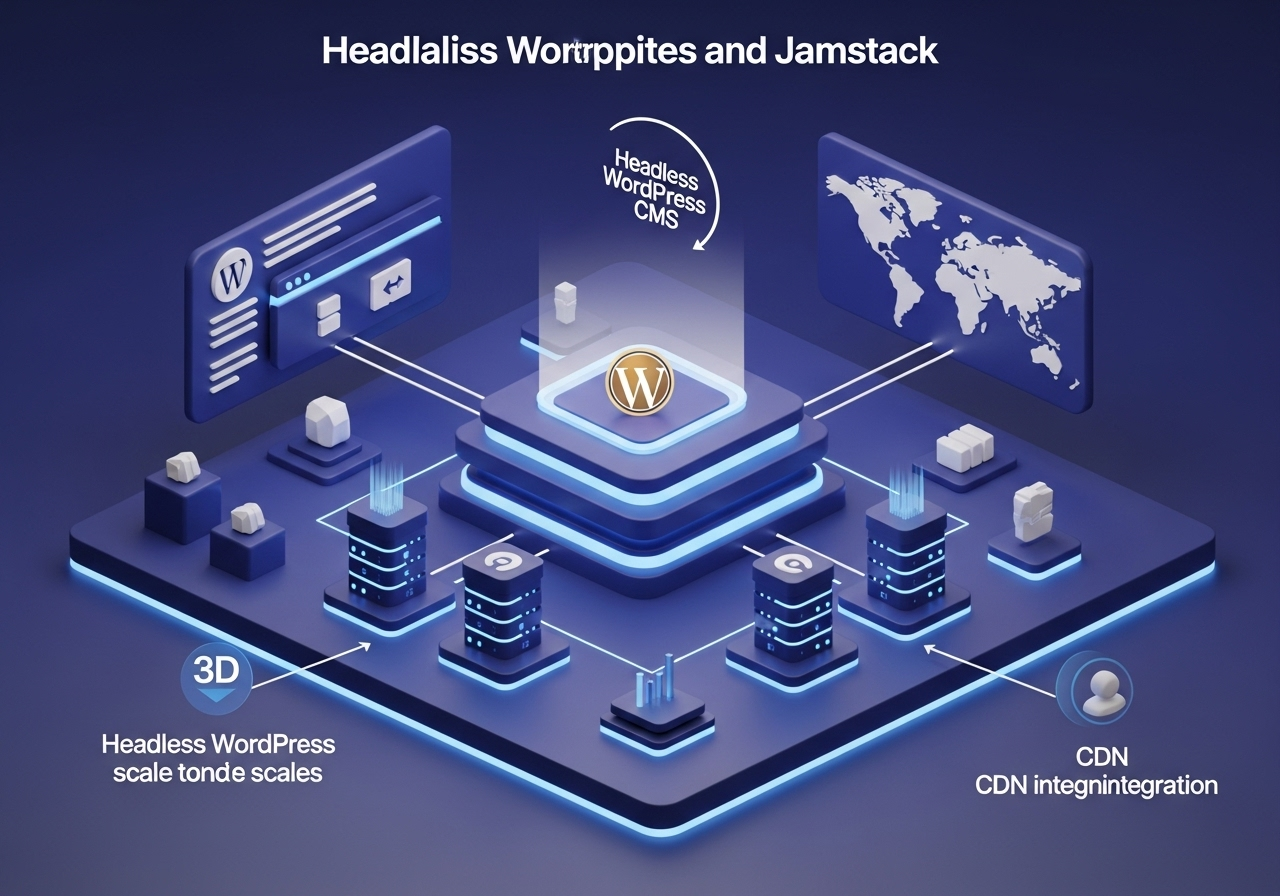
Headless WordPress separates the content management system (the “body”) from the presentation layer (the “head”). This means WordPress manages content in the backend, while the frontend is built with modern tools like React, Vue, or Next.js—giving developers total control over how content is displayed.
Instead of WordPress rendering pages, it simply provides content via an API (REST or GraphQL), which is then pulled into a modern frontend framework.
What Is the Jamstack Approach?
Jamstack stands for JavaScript, APIs, and Markup. It’s a web development architecture that focuses on serving pre-rendered, static pages that are fast, secure, and scalable. Key features of the Jamstack approach include:
- Static site generation for ultra-fast load times
- API-based data handling for dynamic functionality
- CDN delivery for global performance and uptime
When combined with Headless WordPress, it gives enterprises a future-proof website structure.
Benefits of Headless WordPress + Jamstack for Enterprises
1. Unmatched Performance & Speed
By pre-rendering pages and serving them through a global CDN, Jamstack sites load almost instantly. This improves user experience, reduces bounce rates, and boosts SEO rankings—essential factors for enterprise growth.
2. Enhanced Security
With no direct connection between the front-end and WordPress admin panel, the attack surface is significantly reduced. This decoupled architecture protects against common WordPress vulnerabilities like plugin exploits or DDoS attacks.
3. Global Scalability
Enterprises often need to serve audiences across continents. With Jamstack, content is served from the closest server to the user, thanks to CDN deployment. The result? Consistent speed and performance, no matter where your visitors are.
4. Flexibility for Development Teams
By decoupling the front-end, developers are free to build custom user interfaces using modern JavaScript frameworks. Meanwhile, marketing teams continue using the familiar WordPress dashboard to manage content—no compromise.
5. Future-Ready Architecture
Jamstack and headless setups integrate easily with other enterprise systems—CRMs, analytics, personalization engines, and more. They also adapt well to omnichannel delivery, including mobile apps, smart devices, and digital signage.
Enterprise Use Cases in Action
Here’s how large organizations are using Headless WordPress + Jamstack:
- Media platforms scaling news delivery globally
- E-commerce brands reducing page load time and cart abandonment
- Corporate websites launching microsites quickly for global markets
- Educational institutions creating multilingual, accessible portals
Getting Started: What Enterprises Should Consider
Before adopting this architecture, enterprises should:
- Evaluate internal technical resources: Developers need to be comfortable with React or another modern JS framework.
- Choose the right hosting and deployment setup: Tools like Vercel or Netlify make Jamstack deployment seamless.
- Plan content workflows: While the CMS remains WordPress, integrating preview functionality and real-time updates may require setup.
Conclusion
This powerful duo not only meets the technical demands of enterprise growth but also empowers teams to work smarter—developers gain creative freedom, while content managers enjoy the familiarity of WordPress. As digital expectations continue to rise, adopting this future-ready stack is no longer just an option—it’s a strategic move toward long-term success.