Creating Inclusive, Compliant, and High-Performance Web Experiences
In today’s digital-first environment, accessibility is not optional—it’s essential. For organizations in sectors such as e-commerce, education, healthcare, and government, ensuring compliance with standards like WCAG 2.2 (Web Content Accessibility Guidelines) and ADA (Americans with Disabilities Act) is crucial. This is not only to avoid legal risks, but also to expand reach and provide equal access to all users.
At Muniwar Technologies, we specialize in creating modern, scalable, and inclusive websites that align with current accessibility standards. In this article, we share how we build websites that meet WCAG 2.2 and ADA requirements—without compromising on design or performance
Why Accessibility Matters in 2025 and Beyond
Legal Compliance
In the United States, failure to meet ADA requirements can result in lawsuits and penalties. Europe enforces similar regulations through the European Accessibility Act. In India, digital accessibility is emphasized under the Rights of Persons with Disabilities Act and the Accessible India Campaign (Sugamya Bharat Abhiyan).
Business Growth
Around 20% of the global population lives with some form of disability. By building accessible websites, businesses can engage a wider audience that might otherwise be excluded.
Improved User Experience for All
Features such as keyboard navigation, text alternatives, proper contrast, and logical structure not only help users with disabilities—they enhance usability for everyone. Accessible websites also perform better in search engine rankings.
Understanding WCAG 2.2 and ADA
WCAG 2.2 adds nine new success criteria to the existing 2.1 framework, with a focus on improving accessibility for users with cognitive or motor impairments. Key additions include:
- Focus Not Obscured: Ensure focus indicators like button outlines are always visible.
- Dragging Movements: Provide alternatives to dragging actions for users who cannot perform them.
- Accessible Authentication: Avoid relying solely on memory-based challenges (like puzzles) for login or verification.
While the ADA is U.S.-specific, it is globally referenced and emphasizes providing “reasonable accommodations” for digital content. Together, WCAG 2.2 and ADA offer a comprehensive framework for accessibility.
How Muniwar Technologies Integrates Accessibility
Whether you are a startup or an enterprise organization, accessibility is part of our core development process. Here’s how we ensure compliance in every project:
1. Accessibility-First Design Thinking
We begin every project with accessibility in mind. Our UX and UI teams create inclusive wireframes that consider:
- Screen reader compatibility
- Logical tab order
- Adequate color contrast
- Font scalability
- Interactive element size
Example: For a fashion e-commerce client, we ensured each product had alt text, and size selectors were fully operable using the keyboard.
2. CMS Platform Selection
We help clients choose a CMS that supports accessibility from the start.
| Feature | WordPress | Headless CMS (e.g., Strapi + Next.js) |
| Accessibility Plugins | Available (third-party) | Fully customizable |
| Markup Control | Moderate | High |
| Page Speed | Moderate | Excellent |
| Scalability | Moderate | High |
| Best For | Content-heavy sites | Complex, app-like experiences |
Recommendation:
- WordPress is ideal for small to medium-sized businesses needing quick deployment.
- Headless CMS is suitable for enterprise-grade projects requiring performance and customization with accessibility built in.
3. Clean, Semantic Code
Our developers use ARIA (Accessible Rich Internet Applications) labels and semantic HTML5 tags (e.g., <nav>, <main>, <article>) to structure content clearly. We ensure keyboard navigation is seamless and meet or exceed contrast ratio guidelines.
4. Automated and Manual Audits
We use a combination of automated tools such as WAVE, axe DevTools, and Lighthouse along with manual audits. Manual checks include:
- Keyboard-only navigation
- Screen reader testing (NVDA, JAWS, VoiceOver)
- Logical focus flow
- Proper label associations and error messaging
5. Ongoing Accessibility Maintenance
We provide long-term accessibility support, including:
- Regular compliance checks
- Periodic updates to maintain accessibility
- Detailed reporting and issue tracking
- Assistance with new content or feature rollouts
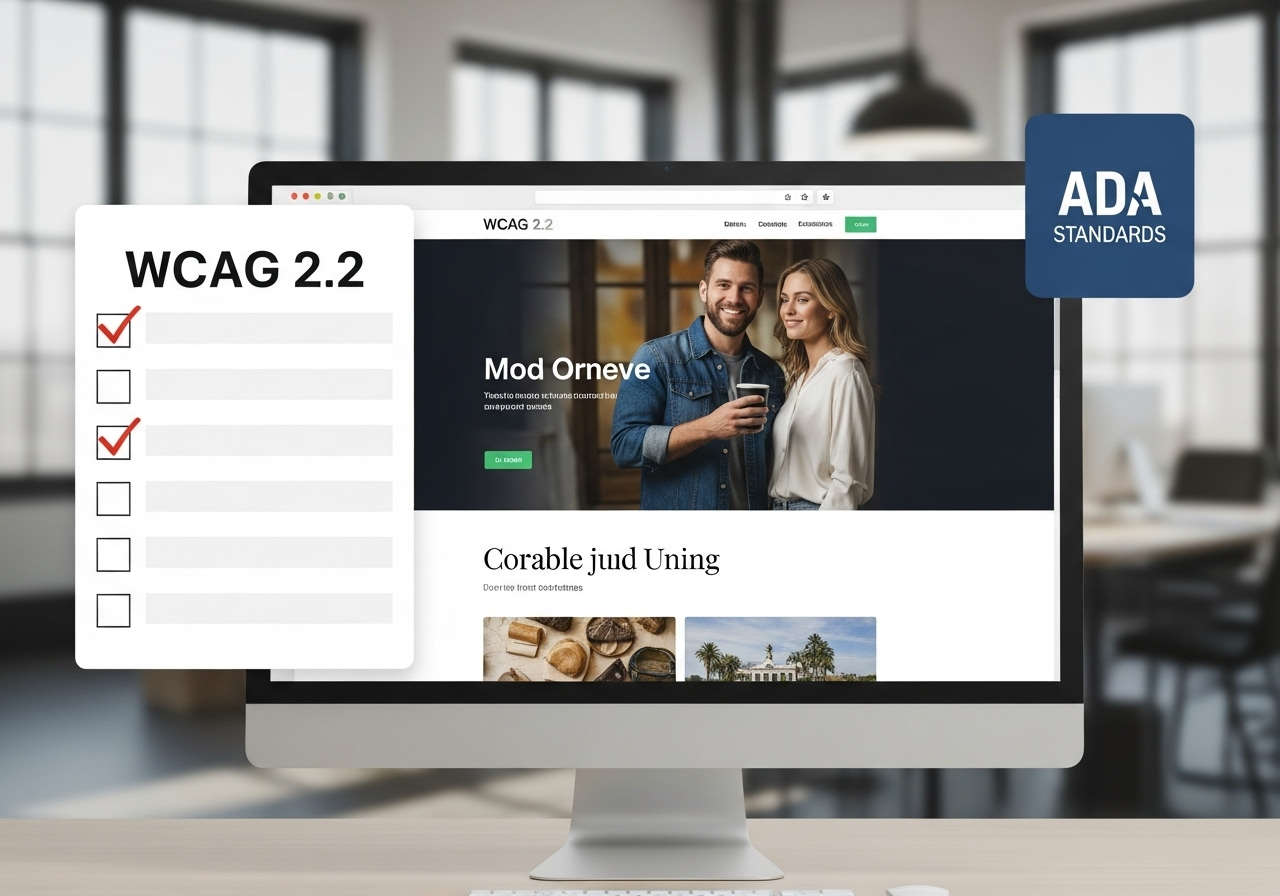
Accessibility Checklist: Does Your Website Meet Standards?
Use this checklist to assess your website’s current state:
- Are all images and non-text content labeled with descriptive alt text?
- Can users navigate the site without a mouse?
- Is text contrast sufficient (at least 4.5:1)?
- Are form fields and error messages accessible?
- Is flashing or blinking content avoided?
- Are headings and interactive elements clearly described?
If you answered “No” to any of the above, your website could benefit from an accessibility audit.
Case Study: Government Health Information Portal
Before Muniwar:
- Inaccessible forms
- Poor color contrast
- No screen reader support
- Four legal complaints filed
After Muniwar’s Intervention:
- Fully WCAG 2.2 and ADA compliant
- Screen reader compatible
- Keyboard-navigable interface
- Legal issues resolved
- Website traffic increased by 27%
Conclusion
At Muniwar Technologies, we tailor each solution to your business needs. Whether you prefer WordPress, Headless CMS, or a custom eCommerce platform, our focus is on combining accessibility, design, and performance for a complete digital experience.